★ Democrat for Assembly District 33 ★
REPRESENTING Cambria Heights and portions of St. Albans, Queens Village, Hollis, Bellerose and Floral Park.
★ ELECTION DAY JUNE 23 VOTE EARLY June 13–21 ★
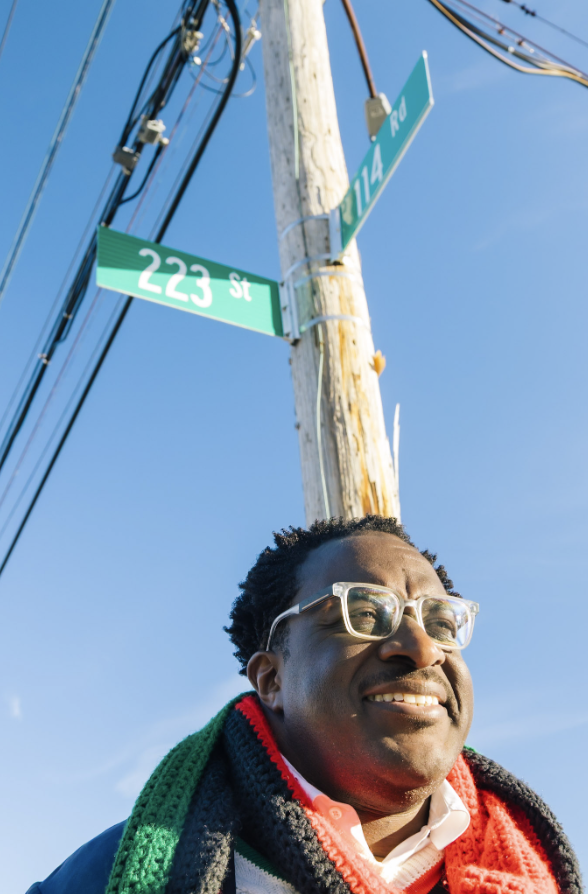
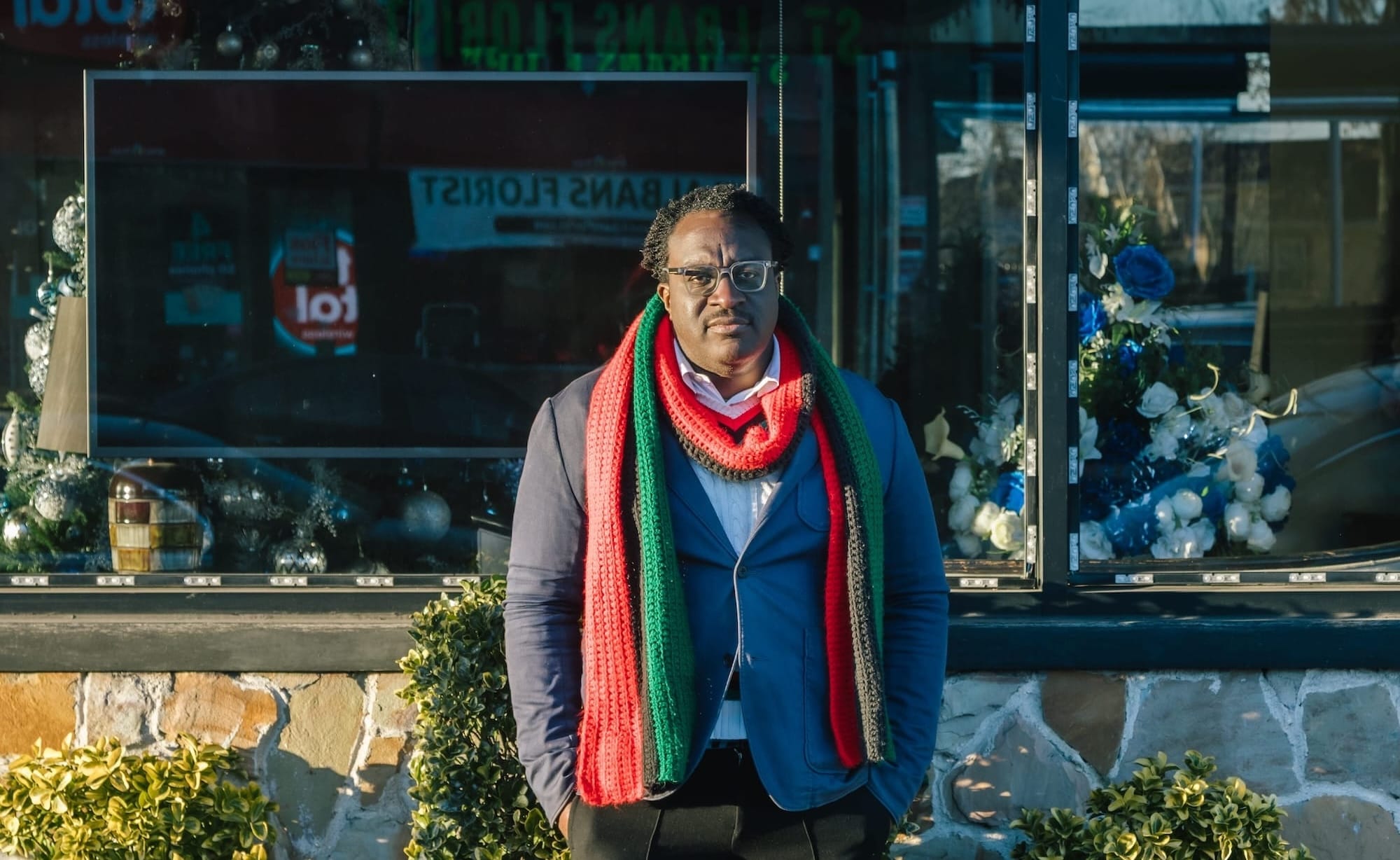
Meet Oster Bryan
Growing up in Cambria Heights, I have seen the greatness in our diverse diasporas. The stories of leaders that fought for the people unseen and unheard can be found all around us. They were not only in the books I read during childhood, but in the homes of our Jazz Greats, the murals on our underpasses, and the living legends that are still with us. It was in Southeast Queens where I learned what it meant to be an advocate and build a community where no one is left behind. I am asking to be your representative to uphold that love of community for all of District 33.
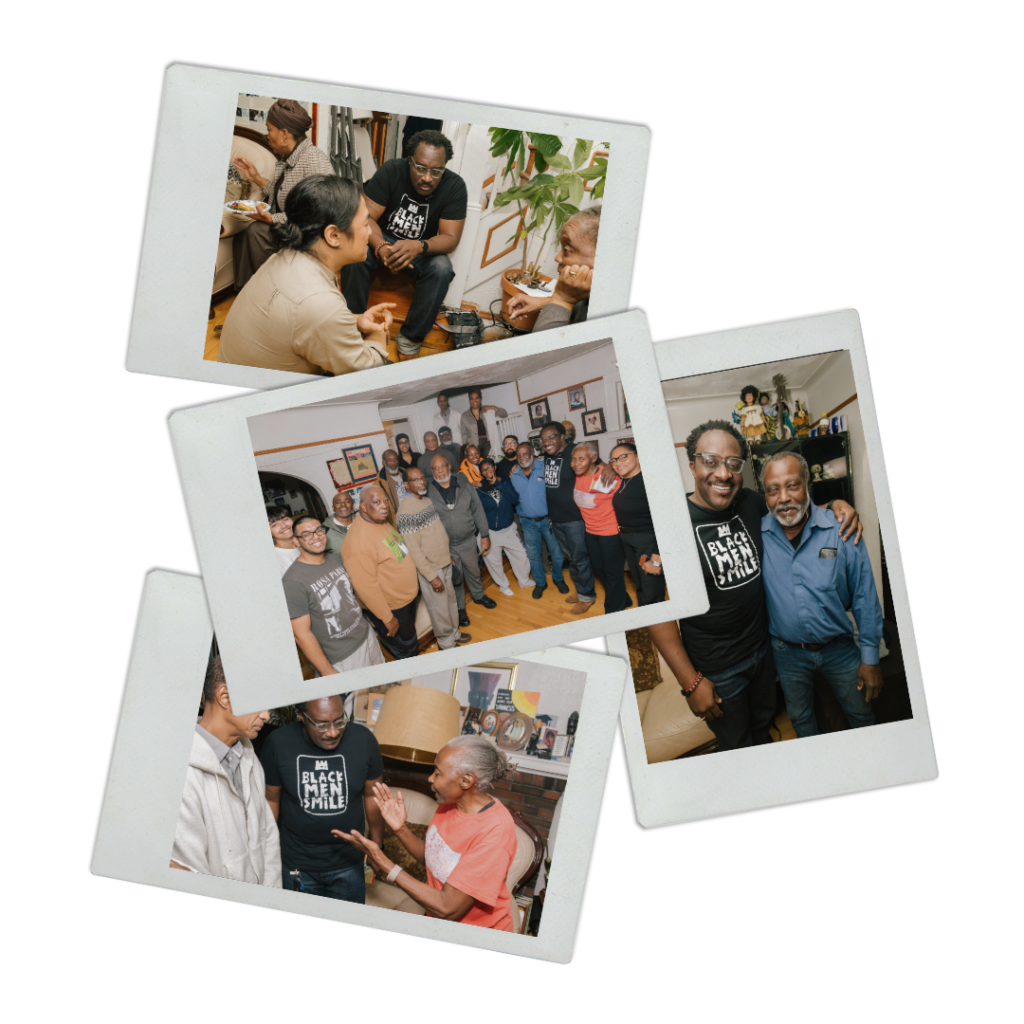
For close to 20 years, I have worked on building coalitions with people from many different walks of life to fight for our shared values. As a CUNY alum and unionized SUNY professor, I will always advocate to give our students the best education, and give educators the support they need to achieve this goal. As a civic leader and community organizer, I have partnered with local activist groups to provide free science and math programs, protest lithium-ion battery plants, organize beautification projects, and promote financial independence.
I am running for an Assembly that puts advocacy first. While rising costs make it harder to stay in our homes, our public schools are underperforming from underinvestment, and our crumbling
infrastructure puts safety at risk. Our basic needs are not being met by those sworn to represent us. It’s time to put the people first; everyone deserves a seat at the table. As your Assemblymember, I will fight for us: for quality education, employment opportunities, affordable housing, healthcare, and justice.
Our Platform for the State Assembly
As your Assemblymember, I will always ask “What’s in it for Assembly District 33?” As a community organizer, I have learned that the community has to come first. This platform is based on thousands of conversations with our community: a community underserved for too long.
HERE’s what WE are fighting for
Fighting Gentrification
Predatory lending schemes such as reverse mortgages, and predatory practices such as tax lien sales, have robbed our community of homes, leading to lost generational wealth, destabilized families, and lost legacies. As a result, too many of our families struggle to afford staying in our communities. We need to ensure that we ease the generational transfer of property to future generations. I will fight in Albany to:
- End deed theft.
- Create pathways for sensible affordable housing while maintaining the character of the neighborhood.
- Support the City Council’s efforts to implement the newly enacted Community Opportunity to Purchase Act (COPA) for community land trusts, which gives communities more power to create and maintain affordable housing. In Albany, I will organize to pass the Community Land Act.
Education & Early Childhood
As a civic leader, I have seen the impact of underfunding on early childhood education and daycare centers. I will advocate for fully funding our day care and removing the red tape so that our youngest students can begin their collective learning experiences more effectively. To meet this goal, we need to provide salary parity for the workforce between public school teachers and their community daycare counterparts, close the waitlist for child care assistance, and expand services for our infants and toddlers.
As a college professor at the State University of New York (SUNY), I have seen firsthand how public colleges are the path to social mobility in this city. No one should have to choose between a quality education and debt. Not only is it time to fully fund our CUNY and SUNY colleges and their neglected infrastructure; it is also time to bring back free tuition.
In addition, we must increase diversity in our specialized high schools. We must prepare children properly for the Specialized High School Admission Test, starting in middle school as a regular class.
Last but not least, we should have mayoral control of our children’s education in order to allow for more community input and control in shaping our children’s futures.
Protecting Our Youth & Preventing Gun Violence
“We must protect our youth and get guns off of our street.”
We all have heard this call for change, time after time. This issue has been plaguing our community for so long, but how has our government addressed it? We must keep our communities safe, but overpolicing our youth has only increased the school-to-prison pipeline. How is more money being invested into our prisons when—
- School District 29 has one of the worst performing schools in the borough?
- School District 28 is the most segregated district in the borough?
Our government can no longer wait until after the next child has been lost to protect our community—but we can only protect this district by addressing the root cause.
Are “at-risk” children inherently violent or without potential, or are there real factors—economic hardship, adverse childhood experiences (ACE), and institutional neglect—that lead our government to turn a blind eye?
Where are children meant to go when there are no youth centers available? Other than the library and venues that require payment in order to stay (restaurants, theaters, malls etc.) our district has no “third spaces” for the youth. When problems arise, where can some of our at-risk children go besides the street?
It takes a village to raise a child. Gun violence is not something we stop after the fact, chasing after crimes are committed. But we can see a future of safer streets for all.
We must prevent violence before it escalates by building a village across our district. Through the state, we can invest in the evidence-based programs that are proven to bring change:
- Afterschool programs
- Mental health support
- Crisis management systems
- Quality public education
Economic Justice
- Fighting Big Business Takeover of Mom-And-Pop Stores
- Small Business Rent Stabilization
For too long and especially since the start of the pandemic, big business has bought out our local establishments—in particular, our funeral homes, medical practices,, and other primary care services and facilities. It’s time for us to ensure that local businesses stay in the community, for without them there is no community-building, no network for our children, and no third spaces. We need small business rent stabilization to fight private equity’s takeover of our stores and service providers. In doing so, we aid in fighting high healthcare costs. We must also ensure that new storefronts are owned by local providers, and not big business, by using the political power of the local Assembly office to uplift our district’s working-class entrepreneurs.
Environmental Justice: Clean Air & Water for All
In 2021, New Yorkers approved the NYS Green Amendment, a provision in the state constitution for the right of all New Yorkers to clean air and water; years later, this law still has not been enforced, especially in Southeast Queens.
In the district, we face multiple threats to air quality: the proposed waste transfer station on Liberty Avenue; the placement of a lithium-ion battery plant, which puts us at risk of increased pollution and fires; and dangerous levels of emissions from JFK Airport and industry on the border of the district.
As a member of the Southeast Queens Residents Environmental Justice Coalition (SQREJC), I have organized in coalition to close down harmful projects like the proposed waste transfer station. We can improve our air quality, but only by using the collective power of people and our institutions.
I will use the Assembly office to fight for clean air and water for all.
Protecting Our Homes From Flooding
Through my work as part of Southeast Queens Residents for Environmental Justice (SQREJC), I recognize the serious issue of flooding in our district, especially on blocks with communal driveways. These communal driveways are considered private property, and as a result, our local agencies are not legally responsible for their maintenance. Without functional block associations to coordinate maintenance, these driveways can fall into a state of neglect and disrepair, thereby becoming a magnet for flooding.
Our campaign proposes a solution that aids affected residents while also promoting green energy. We will advocate subsidizing home solar panels on affected blocks in exchange for repairing the communal driveways, a win-win for both the state and the affected blocks. With this exchange, both residents and the state will save money by lowering the stress on our aging power grid.
Through SQREJC, we have also tested new soil- and plant-based technologies to absorb more water for mitigating flooding; I hope to bring this environmental knowledge and experience to the Assembly.
Term Limits
Too many times, we are left disappointed by government officials who are supposed to represent us. We are tired of those who stay in office but say, “sorry, it’s out of my hands” whenever our neighbors call for help and accountability.
Currently, Assembly members serve 2-year terms with no term limits. Once an Assembly member is elected, they could stay in office for the rest of their lives, and many spend decades in office. At this moment, many New Yorkers no longer want the same people in office who have failed to address the same longstanding problems in their neighborhood. With limitless terms, we have little leverage with which to hold our officials accountable.
As your Assembly member, I will fight for term limits for the State Assembly and State Senate—a maximum of four 2-year terms—to put our leaders in check.
I will advocate for creating a ballot proposal that allows the people to vote for term limits.
An Open and Accessible Assembly Office
Many local residents have told me that they want to be involved in government but find it hard to learn what is happening locally; as a result, many new policies catch them by surprise. For those who do know which office to contact, they are often given the runaround and are told, “we can’t help you; call 311”—and that’s only if the office is open to begin with. But it doesn’t have to be this way. As a community organizer, I have 20 years of experience in coalition-building. I have shown up for our community to promote education on government, independent bloc associations, and how to access resources.
Centralized political power has made local government inaccessible to regular folks. I will open up my Assembly office services to be actually accessible to people—regardless of what language they speak, what problems they may have, or how involved in local politics they currently may be. We commit to hire competent staff so that constituent issues will be resolved in a timely manner with consistent communication. We need representatives that are present in the district. I will host events to ask about issues at the door, table around the district weekly, and work to push legislation based on community input rather than self-interest.
AI Regulation
Generative AI has come to occupy a large role in our daily lives. As this new technology develops, we must make sure that it is regulated for safety and worker justice.
As a former member of DC 37 and a current member of United University Professions (UUP), I will always stand up for workers. I have seen AI’s takeover of jobs that would have benefited our community, including union jobs, other well-paying jobs, and even entry-level work. AI should not be used for public-facing services, emergency services, or job replacements.
In addition, our friends and family should not have to worry whether or not a post online is AI disguised as the real thing.
In the Assembly, I will fight to ensure that AI does not take over either our right to privacy or our job opportunities and that any use of AI is subject to transparency.
Reparations
Can we truly believe in justice and not believe in a need for reparations? The fight for reparations acknowledges the history of slavery, Jim Crow, redlining, and other forms of discrimination and the generational impact it has had on Black and indigenous communities in the state of New York. The work of the New York State Community Commission on Reparations (2023-A7691) has begun, and I vow to see it through to completion.
The scales of justice have been out of balance for much too long. Luckily for us, the time is right to put them back in balance.
Immigrant Justice
The scales of justice are still unbalanced. Whether it be masked secret police snatching our neighbors into cars in the middle of the night or the revocation of Temporary Protected Status, we need justice. It was the civil rights movement that led to immigrant rights. All of our struggles are connected. We must come together; in the same way that Dr. King’s Poor People’s Campaign in 1968 fought for all people under the boot, we must do the same.
We need to unmask ICE agents, provide legal services for immigrants to protect against injustice, and do the most we can to fight for dignity
Donate
I don’t believe in funding by special interests—corporate developers, super PACs, or big business—and will never take their money as a candidate or an Assemblymember.
Your support powers our campaign to make sure our community’s voice is heard in Albany. Thank you.
★
For residents of District 33, your donation up to $250 is matched up to 12x through New York State’s matching funds program!
★
Our District
Assembly District 33 covers the beautiful neighborhoods of St. Albans, Cambria Heights, Bellerose, Hollis, and Queens Village.
We have been at the forefront of the fight for integration in the sixties, home to legends such as A Tribe Called Quest, Jackie Robinson and Run-DMC, and we have fought to keep our neighbors in their homes and keep our history preserved.
On the map, enter your address to see if you’re in the district, and check out some of Oster’s favorite businesses and community landmarks.
PAID FOR BY OSTER FOR US